Homemade Nut Butter
The first time I made almond butter I threw it out. I'd read that you just blend nuts until they turn into butter, so I blended almonds for about four minutes, looked into the food processor at a bowl of damp sand, decided the internet had lied to me, and scraped the whole thing into the bin. A jar of almonds, gone.
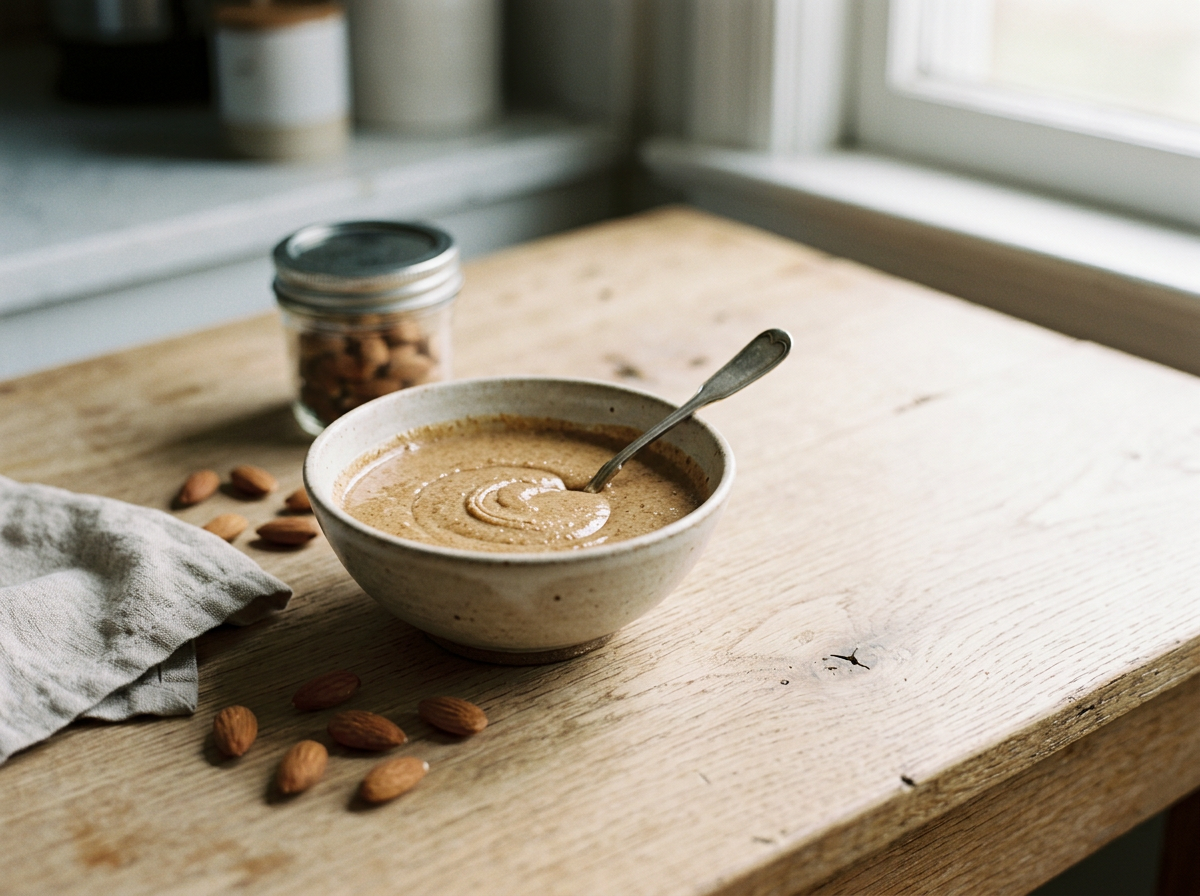
What I didn't know is that damp sand is stage three of six, and that the thing standing between sand and butter is not technique but patience. Nuts are roughly half fat by weight. That fat is locked inside cell walls, and a food processor blade breaks those walls open slowly — first into flour, then into a paste that climbs the sides, then into a stiff dough that makes your machine groan, and only then, somewhere around minute eight or nine, into something that pours. If you stop before that, you get sand. If you keep going, you get the best nut butter you will ever eat, for about a third of what the good jars cost.
What you need
A food processor. Not a blender — a blender needs liquid to circulate and nut butter has none, so you'll end up adding oil to rescue it and the result is greasy. A high-powered blender with a tamper (Vitamix, Blendtec) can do it, but you have to stand there pushing the whole time. A 7-cup or larger food processor is the right tool and does it unattended.
That's genuinely the whole equipment list. And 500 g of raw nuts.
The method
Roast the nuts. This is the only step people skip and the only one that really matters. Spread 500 g of raw nuts on a sheet pan and roast at 350°F for 10–12 minutes, until they smell like something you want to eat and the skins are just beginning to darken. Roasting does two things: it builds flavor, and it makes the fat run more freely, which cuts your blending time roughly in half. Cold nuts from the bag will take twenty minutes to break down. Warm, just-roasted nuts take eight.
Let them cool for five minutes, but no longer. You want them warm, not hot — hot nuts will steam inside the processor and the butter can seize.
Blend, and keep blending. Tip the nuts into the food processor and run it. Scrape down the sides every two minutes with a spatula. You will pass through, in order: coarse meal, fine flour, a crumbly paste, a single stiff ball that rides around the bowl (this is the moment everyone panics — don't), a thick spreadable butter, and finally a glossy butter that moves like honey. Total time is 8 to 15 minutes depending on the nut. Cashews are fastest; almonds and hazelnuts take the longest.
Season at the very end. Half a teaspoon of fine salt for 500 g of nuts. Blend for another 30 seconds to work it in. Salt goes in last because adding it early makes the butter tighten.
Nut by nut
Peanuts are the easy win — high in oil, they break down in about eight minutes and come out silky without any help. Buy them raw and unsalted if you can, or use roasted unsalted and skip the oven step.
Almonds need the most patience, 12 to 15 minutes, and the butter stays a little grainier than peanut. That texture is correct, not a failure. Leave the skins on for a more assertive, slightly tannic butter, or blanch them off for something pale and delicate.
Cashews turn to butter fast and sweet, and can go from butter to something closer to cream if you keep going. Excellent as a base for sauces.
Hazelnuts are the one worth doing properly. Roast them, then rub the warm nuts in a clean tea towel to shed most of the skins — the skins are bitter and will haunt the finished butter. Blend with 30 g cocoa powder and 40 g maple syrup and you have a chocolate spread that makes the supermarket version look sad.
Pecans and walnuts are soft and high in oil, so they're quick, but they oxidize faster than anything else. Make small batches and keep them cold.
Notes
Additions, if you want them. A tablespoon of neutral oil will make any butter looser and glossier, though a properly blended batch doesn't need it. A teaspoon of honey or maple, a pinch of cinnamon, a spoonful of cocoa, vanilla, flaky salt stirred in at the end for crunch. Add all of these after the butter has come together, never before.
Storage. A sealed jar in the cupboard keeps for a month; the fridge stretches it to three but makes it stiff enough to bend a spoon. Natural separation is normal and not spoilage — stir it back in, or store the jar upside down and the oil redistributes itself.
If it won't come together after 20 minutes, your machine is underpowered or the batch is too small. A food processor needs enough volume for the blade to catch; below about 300 g of nuts it just flings them around the bowl.
Make hazelnut first. It's the one that convinces you this is worth doing.